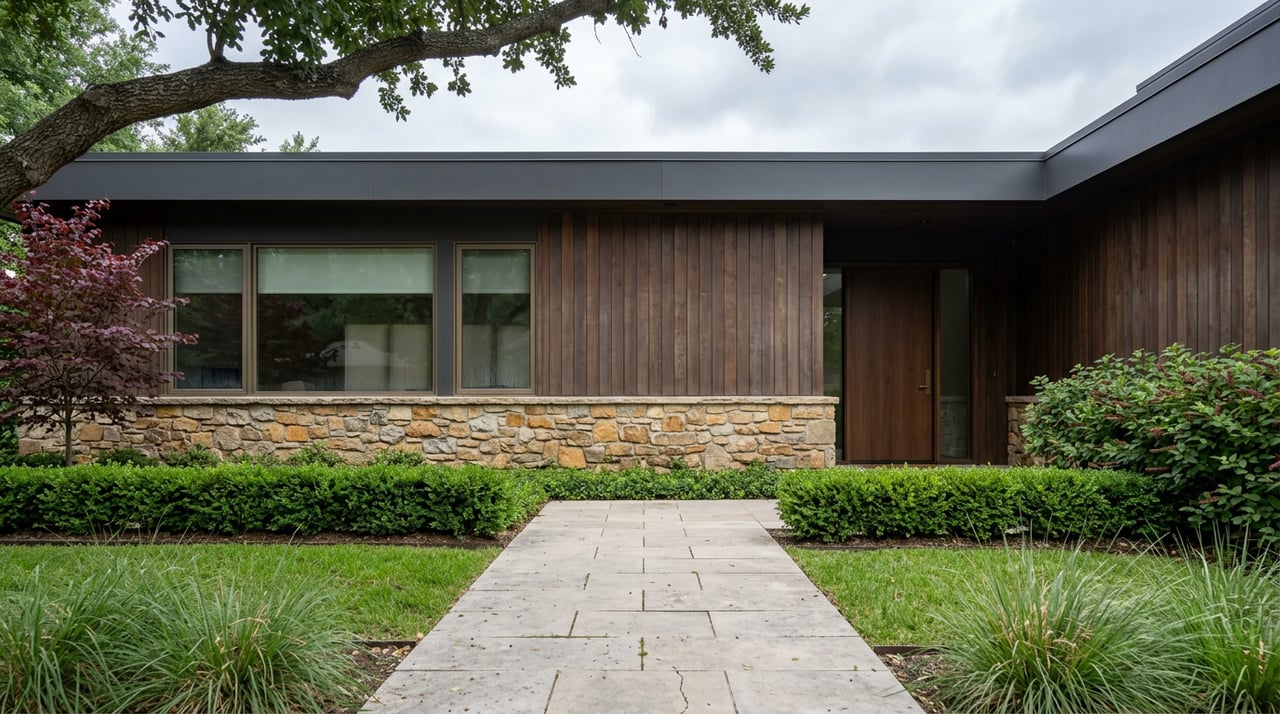
In March 2026, four homes sold in Nichols Hills. That's the entire month's worth of transactions behind the median price you'll see quoted for one of Oklahoma City's most recognized addresses. A number built on four sales moves hard in either direction, and this year it has. Depending on which tracker you check and which month you check it, Nichols Hills has been reported worth anywhere from the low $600,000s to just past $1.1 million, with different trackers disagreeing on whether values are even moving up or down.
That instability matters if you're cross-shopping Penshurst, the neighborhood immediately south of Nichols Hills that shares its architecture era, its lot sizes, and its grocery store lineup, but not its name. A buyer comparing the two isn't really weighing one price against another. They're weighing a name against a set of physical facts, and the name's price tag turns out to be harder to pin down than a portal search suggests.
The Number Nobody Can Agree On
Ask a handful of sources what a Nichols Hills home costs right now and you'll get a handful of different answers, not because anyone is wrong, but because the sample size behind each number is small enough that a single closing can swing the average.
| Tracker | Snapshot | Figure | What it measures |
|---|---|---|---|
| Redfin | March 2026 | $1.0M | Median sold price, down 29.4% year over year, on 4 closings |
| Movoto | April 2026 | $920,000 | Median sold price, on 42 closings |
| Movoto | July 2026 | $899,000 | Median list price |
| Movoto | August 2026 | $886,000 | Median list price, down roughly 10% year over year |
| Regional brokerage market update | May-July 2026 | $613,000 | Median sold price, on 10 closings that quarter |
| Zillow | Current | $799,756 | Smoothed value index, up 8.8% year over year |
The spread isn't a rounding error. It's the predictable result of a market where, in one recent three month stretch, only ten homes closed, according to a regional brokerage's own market update from mid-2026, with prices in that window ranging from $249,900 to $3.9 million. When the comparison set includes both ends of that range, the median tells you which handful of houses happened to sell during that window. It doesn't tell you what a Nichols Hills address is worth in any durable sense.
The disagreement runs deeper than the dollar figure. Zillow's smoothed index, which averages values over a longer stretch, currently shows Nichols Hills up 8.8 percent year over year. Movoto's raw list-price data for the same general period shows a decline of roughly 10 percent. Both can be technically accurate. They're measuring different things and arriving at different conclusions about the same several dozen blocks.
That's worth sitting with before deciding the Nichols Hills premium is worth paying. The premium itself doesn't hold still long enough to price with any confidence.
What Penshurst Actually Shares With Its Famous Neighbor
Penshurst isn't a discount version of Nichols Hills. It's a neighboring subdivision built during roughly the same decades, on similarly generous lots, using a lot of the same design vocabulary.
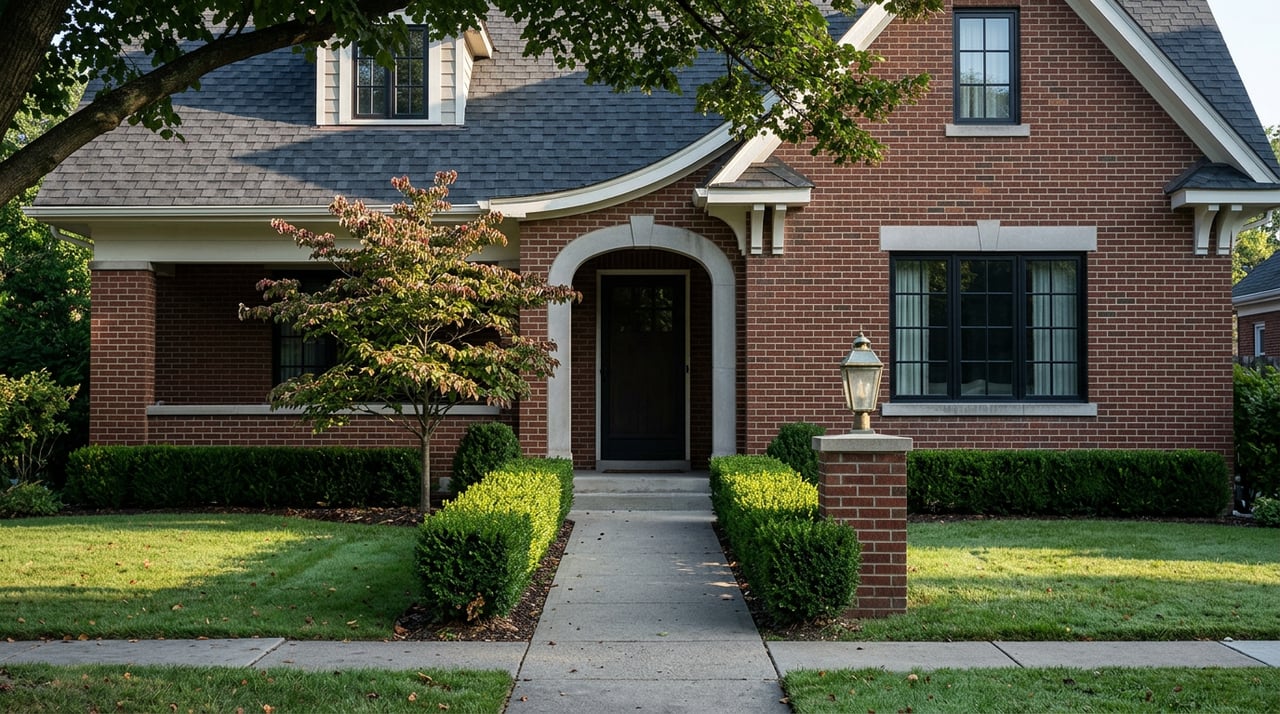
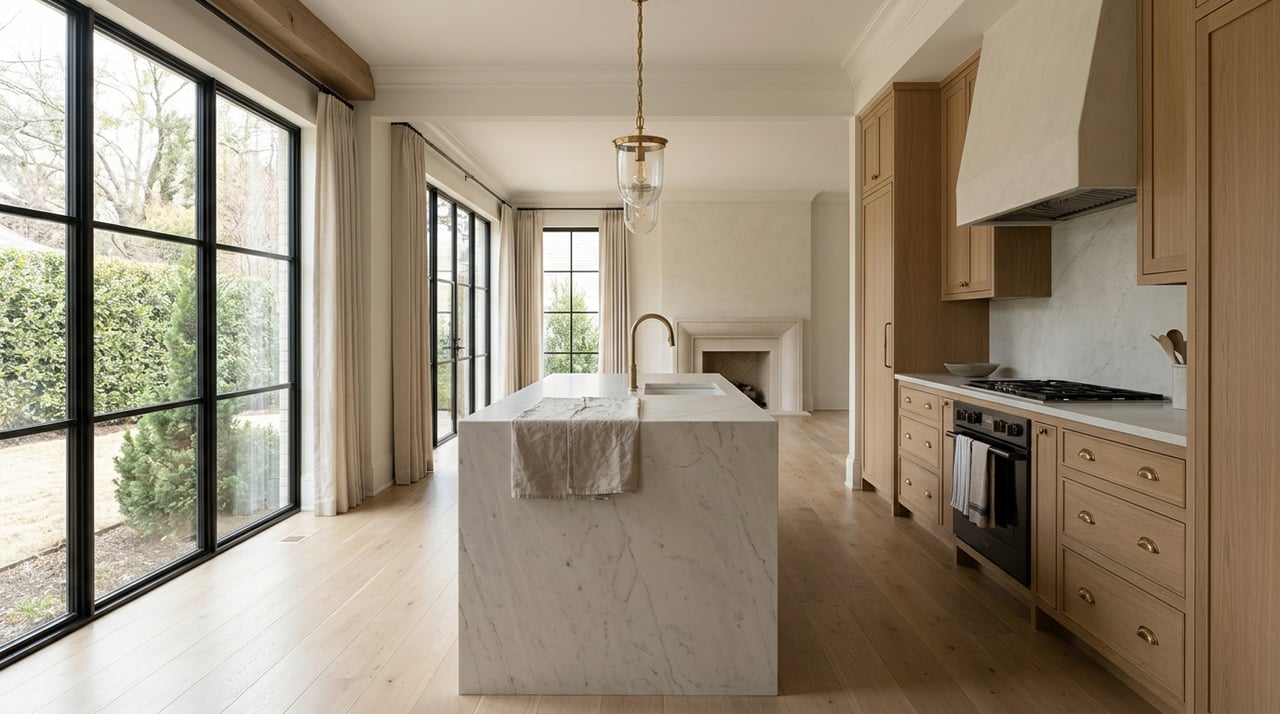
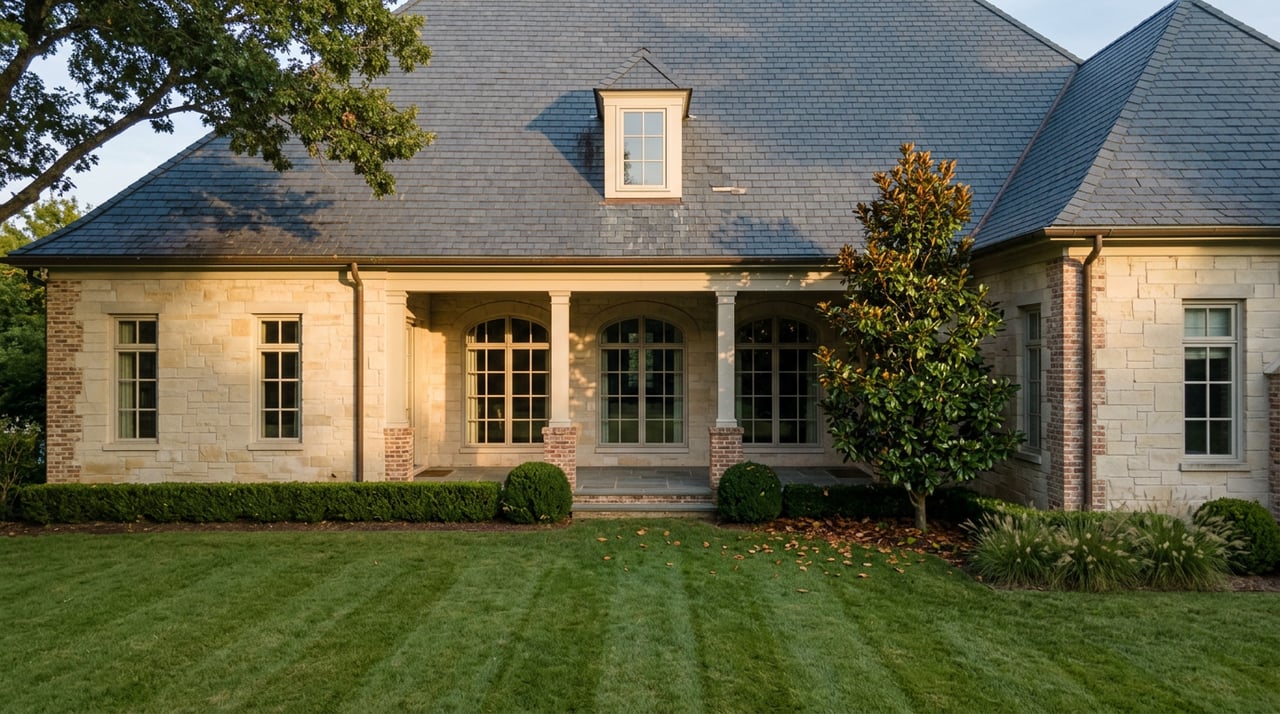
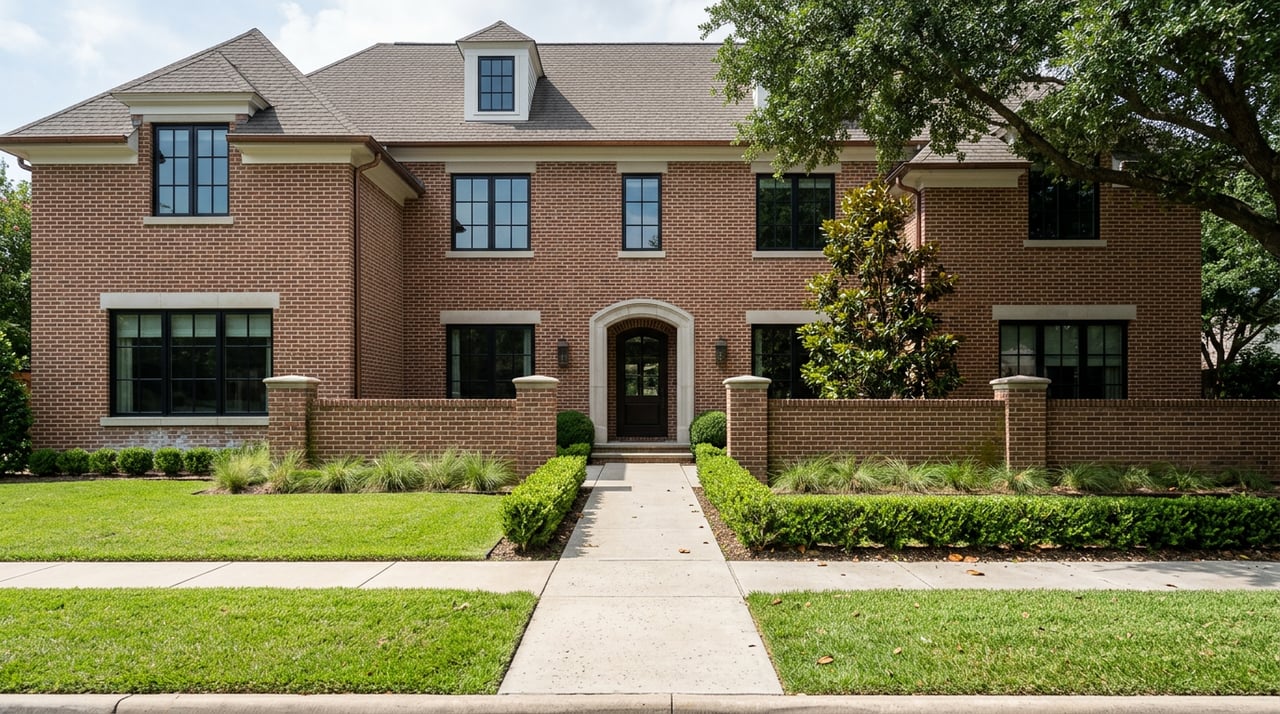
Homes there went up from the 1950s through the 1990s, ranging from 2,200 to more than 6,900 square feet, with brick, stone, and rock exteriors and architectural styles running from traditional colonials to Frank Lloyd Wright-influenced designs. Lots tend toward oversized, planted with mature redbuds, evergreens, and oaks, finished with the same cobblestone walkways and brick paver sidewalks you'd find a few blocks north. Interiors lean the same direction too: hardwood floors, marble entries, raised ceilings, custom built-ins, and in some homes, wine grottos and cedar closets.
The location does much of the same work. Penshurst sits within walking distance of restaurants near May and Warwick, minutes from the Oklahoma City Golf and Country Club, and close enough to Whole Foods, Trader Joe's, Natural Grocers, and Sprouts Farmers Market that residents shop at the same stores their Nichols Hills neighbors do. One recently sold Penshurst listing described the block as a place that "has the feel of Nichols Hills." Another called it a "suburb of Nichols Hills proper."
That's not marketing exaggeration so much as an honest description of overlap. On paper, the physical inputs, era, lot size, materials, proximity, line up closely enough that a buyer touring both neighborhoods back to back could reasonably ask why one carries a price tag from a different bracket entirely and the other doesn't.
Where The Overlap Ends
Here's the part the same-bones framing skips past: at least one recent Penshurst sale advertised itself, in capital letters, as carrying no HOA at all.
That detail is worth sitting with. Nichols Hills' reputation as a place where blocks look a certain way and keep looking that way isn't an accident of good taste. Something maintains it. Penshurst, built out across four decades by different builders on different lots, doesn't come with one governing document guaranteeing the same thing block to block. Some pockets may carry covenants. At least one documented sale had none, which means no architectural review, no enforced materials standard, nothing beyond a neighbor's own judgment shaping what gets built next door tomorrow.
For a buyer weighing the two neighborhoods, this is the real trade, more than the price gap. Nichols Hills' number is unstable, but the consistency its reputation implies isn't automatically part of what you're buying in Penshurst. You may be buying a similar-looking house today with no contractual promise about what the block looks like in ten years.
What This Means If You're Comparing The Two
None of this makes Penshurst the lesser choice. Plenty of buyers value the larger, less-restricted lot and the freedom that comes without a homeowners association weighing in on paint colors or fence height. It does mean the two neighborhoods deserve evaluation on different terms than a side-by-side price chart suggests.
If long-term consistency matters to you, verify what actually governs the specific block you're considering in Penshurst rather than assuming it mirrors its neighbor. If it turns out there's no HOA, that isn't automatically a problem. It's a fact that changes what you're purchasing, and it's the kind of detail worth having someone read the actual title work and any recorded covenants for, not just the listing photos.
Quick Answers
Is Penshurst part of Nichols Hills? No. Penshurst is a separate, adjacent neighborhood. Listings describe it as bordering or resembling Nichols Hills, but it sits under different governance and isn't the same city or zip code.
Does every home in Penshurst lack an HOA? The record doesn't support that generalization. At least one recently sold Penshurst property was marketed as carrying no HOA. Because the neighborhood was built out over four decades by different developers, buyers should confirm what, if anything, governs the specific block or addition they're considering.
Why did Nichols Hills' median price move around so much in 2026? Mostly volume. Several trackers reported fewer than a dozen closings across multi-month stretches this year. With that few transactions, one high-end estate sale or one starter home closing can move the median by six figures in either direction.
Ready To See What Your Comparables Actually Look Like?
Numbers this unsettled are exactly why a generic online estimate falls short in either neighborhood. If you're weighing a move between Penshurst and Nichols Hills, or trying to understand what your current home is worth against sales that may or may not be truly comparable, Rebecca West can walk through the real numbers block by block. Request Your Home Valuation and get a figure grounded in this market, not a portal's monthly guess.